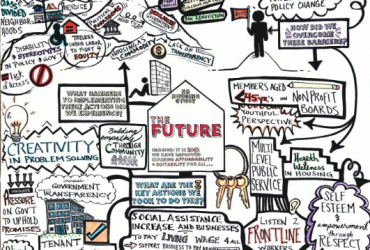
The Staying Home project explores the role of rent banks in keeping renter households stably housed while addressing gaps in financial and social supports.
Housing unaffordability and the rising eviction rates have become a growing concern across not only New Brunswick, but Canada as a whole. Staying Home: The Role of Rent Banks in Enhancing Housing Stability for Canada's Renter Households explores how rent banks can serve as a tool to prevent homelessness and maintain housing stability. Rent banks are short term; no interest loans/grants provided to tenants living with housing precarity for example, at risk of eviction. housing precarity. They are often distributed by non-profits or government bodies.
As the first study on rent banks in Canada, this project drew on the experiences of tenants, landlords, and community organizations to identify strengths and limitations of rent bank programs, and then analyzed responses to identify key themes.
Stakeholders throughout the country commented on the need for increased financial support and eviction prevention protocols/tools as many tenants cannot keep up with the high housing costs. They have highlighted systematic reforms and better wraparound support as critical steps to help best navigate their housing situations.
To conclude, the Staying Home project underscores the importance of eviction prevention strategies in order to address housing precarity in New Brunswick, and across Canada. While rent banks alone cannot solve the housing affordability crisis, they can be implemented as a short-term tool to ensure people stay housed.
By Ghazal Motamedi
Ghazal (she/her) is a Bachelor of Health (Honours) student at UNB. Her research interests are in the social determinants of health and the intersection of housing and reproductive health.